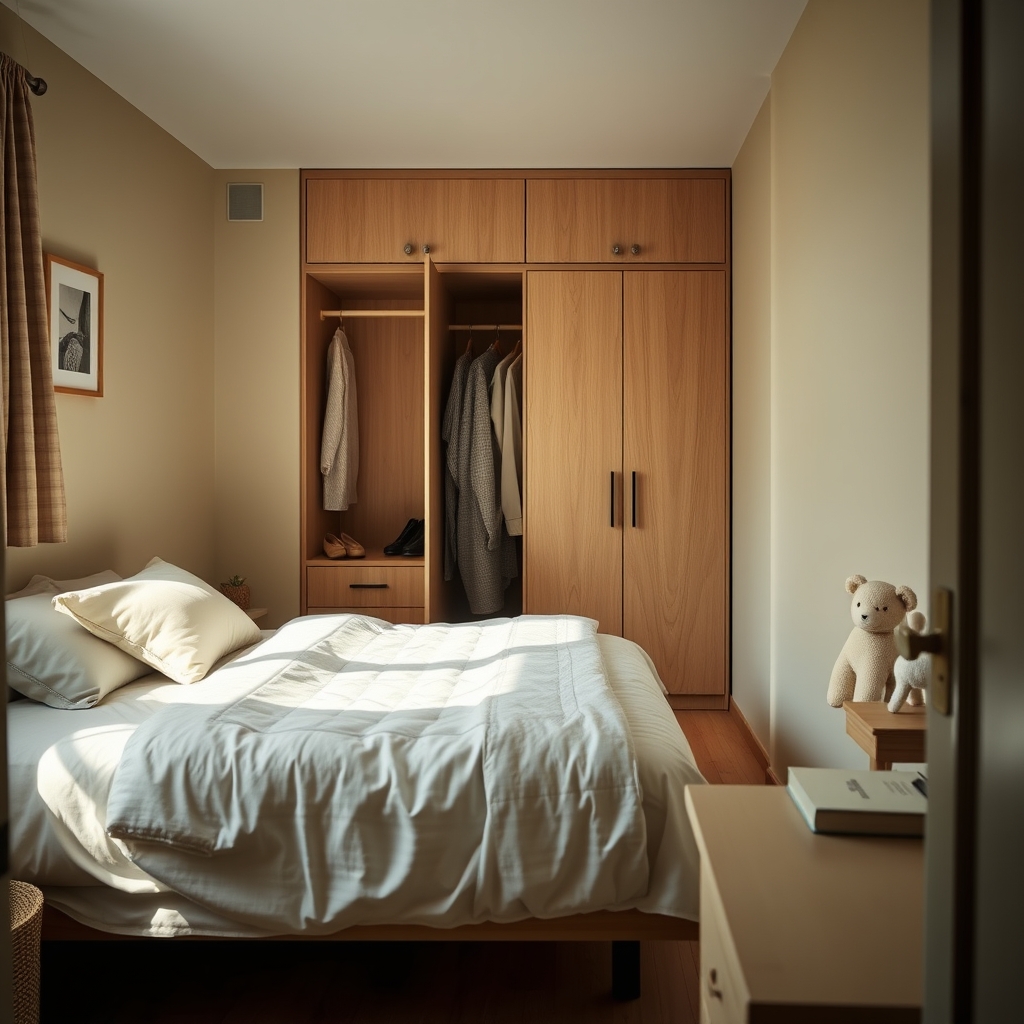
Measure the room before choosing a bed
A standard bed and two bedside tables can consume most of a small room. Lift storage, a wall-mounted shelf or a slimmer headboard can keep the same comfort while freeing floor space.
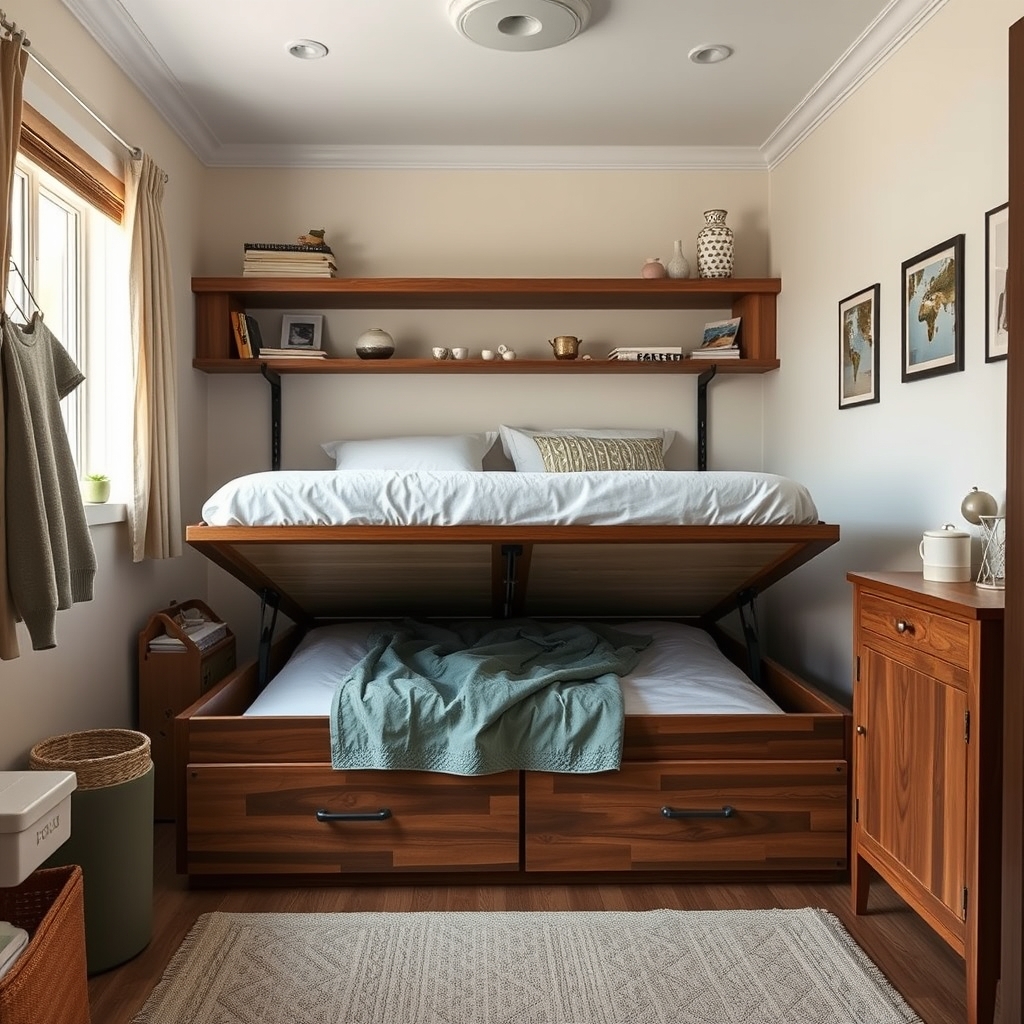
Shallow storage is often enough
Most folded clothes do not need a deep cupboard. Built-ins around 35 to 45 centimetres deep can hold daily items, leave more walking space and stop the room feeling like a storage unit.
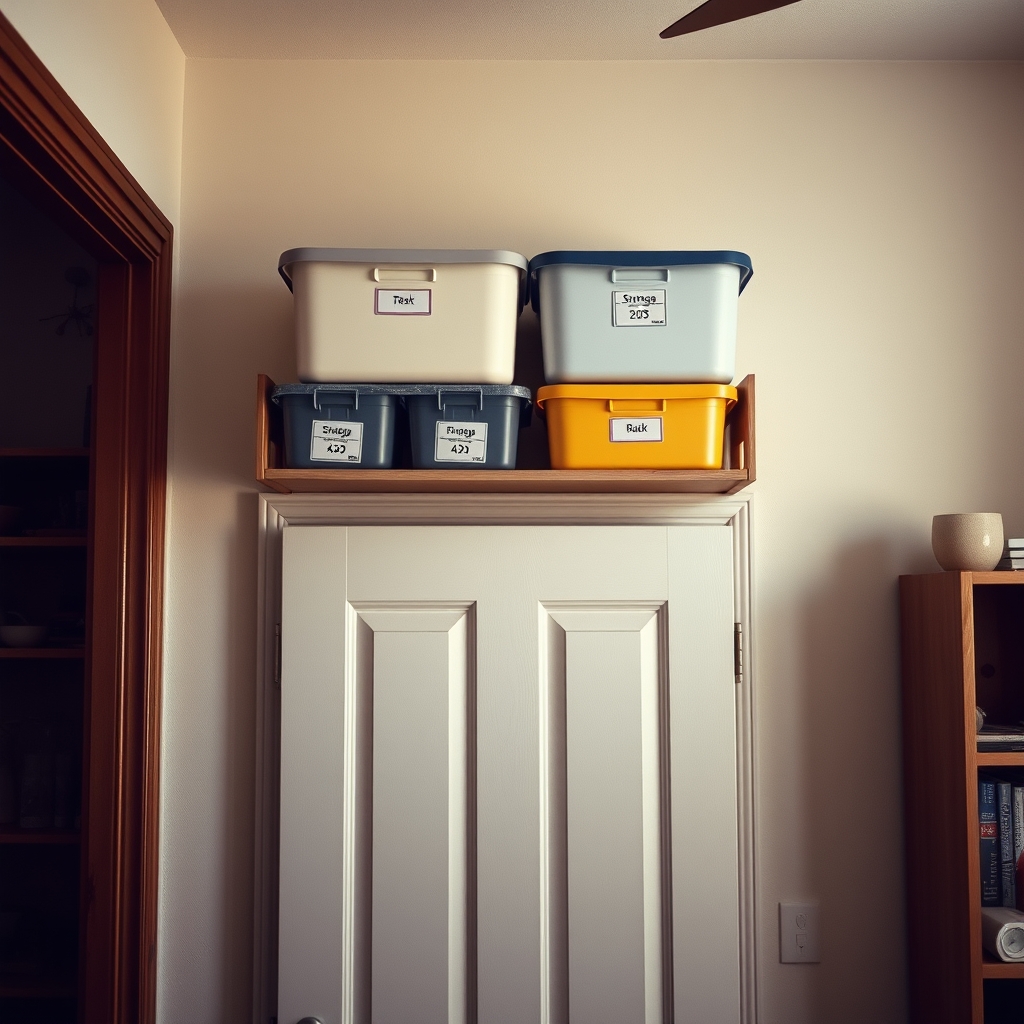
Use the wall above the door
The strip above a bedroom door is useful for seasonal bags and spare bedding. It should be closed, labelled and reachable from a stable step, not used as an open shelf that gathers dust.
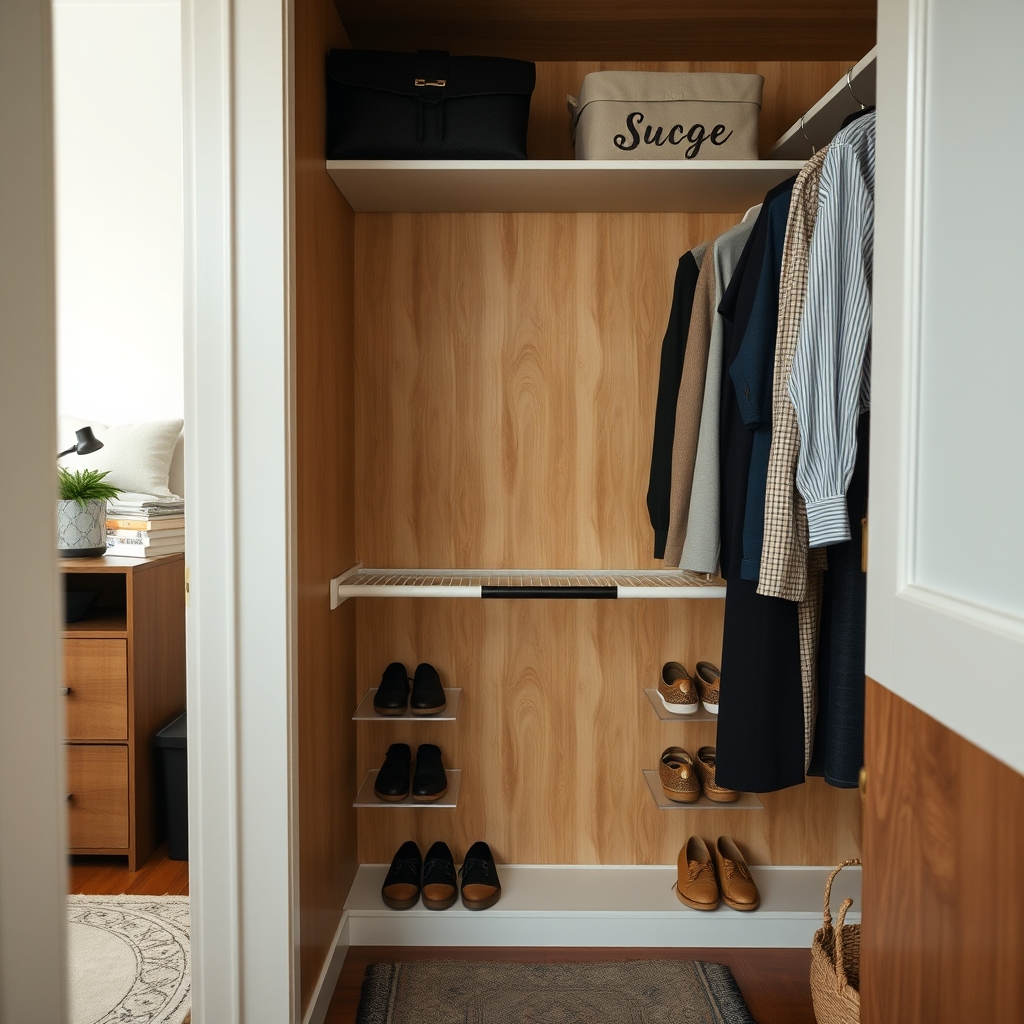
Make the wardrobe interior work
A double rail, a lower shoe shelf and a clear height for long coats make a small wardrobe feel larger. Mirrors help with light but should not hide a door or crowd the bed.
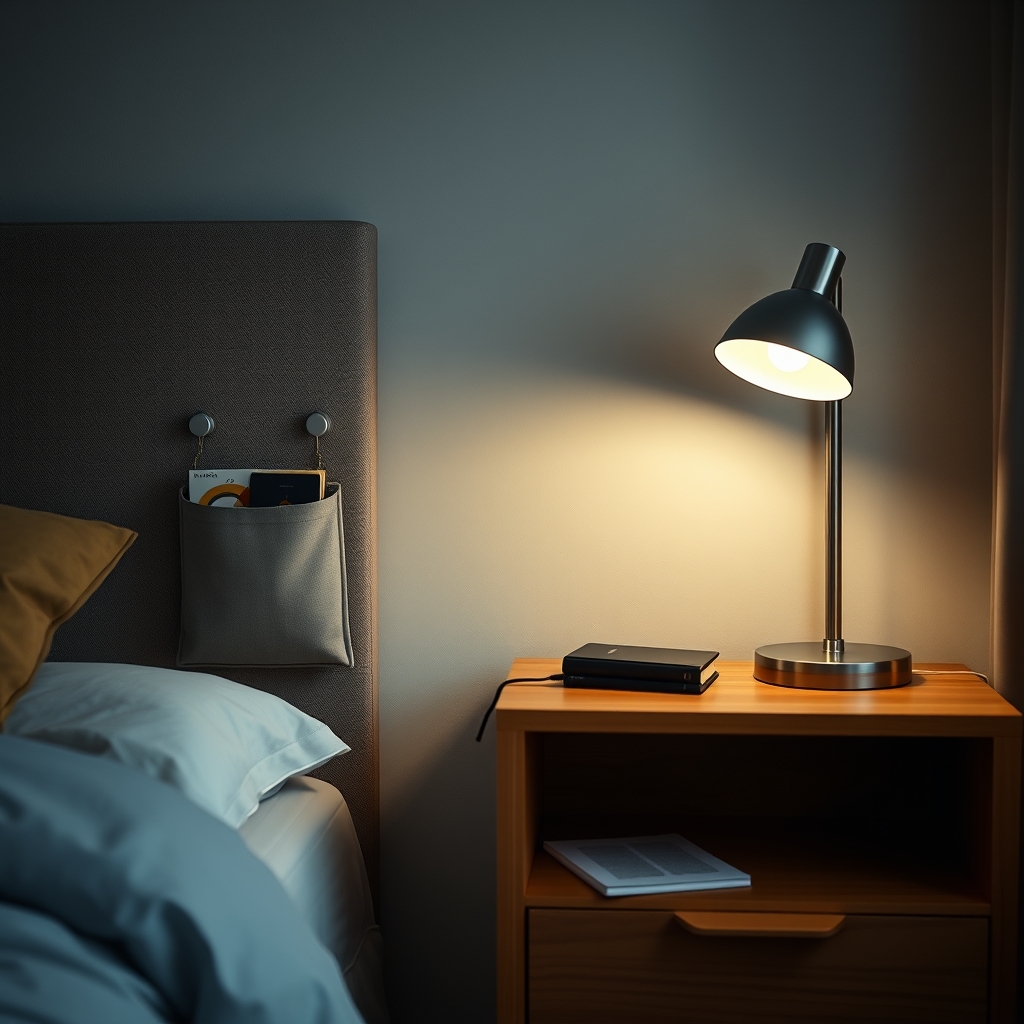
Keep one surface clear
A nightstand that becomes a pile of papers makes the room feel smaller. Built-in drawers or a wall pocket give those items a home so the visible surface stays calm.
In a small bedroom, hidden storage is only useful if it is easy to reach every day.
Practical interior design reporting for local readers.
Questions or a correction? Contact us.